

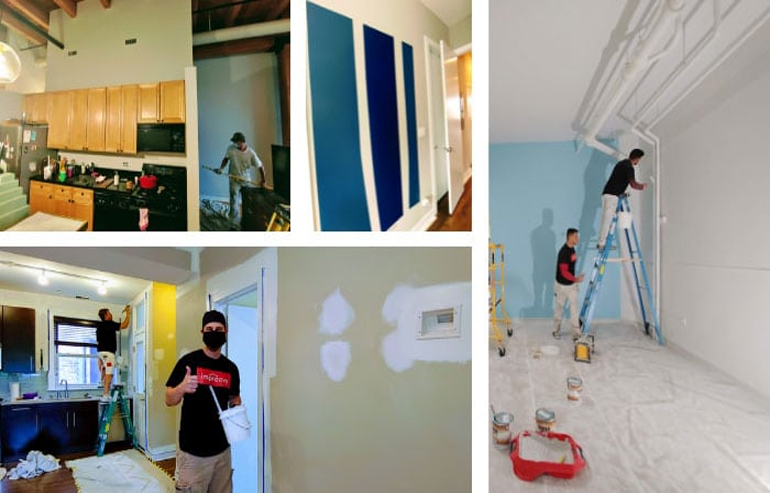
Interior & Exterior Painting

A Brief Introduction On Painting

Difference Between Exterior and Interior Paint Here are a few popular differences between exterior and interior paint:


1. Composition Interior Paint:
Designed for controlled environments, interior wall paint usually contains fewer weather-resistant additives. Its formulation is more about maintaining a pleasant appearance than enduring severe weather conditions. It faces less exposure to outdoor elements and focuses on providing a clean and fresh look.
Exterior Paint:
Specifically engineered for exposure to harsh outdoor elements, exterior paint contains additives that resist weathering, damage from UV rays, moisture, and severe temperature changes. It is formulated to withstand rain, sun, snow, and extreme climate conditions. Warm interior paint colour for your space – Beautiful Homes Image courtesy, Beautiful Homes Services
2. Durability and Resistance Interior Paint: It is designed to resist everyday wear, like stains and smudges. You will not have to worry about common indoor impacts like spills, marks, and frequent touches. It aims at retaining its look and being easy.
Exterior Paint: It is designed for heavy-duty resistance against harsh outdoor conditions like direct sunlight, heavy rain, fluctuating temperatures, and moisture. This type is meant to protect your house against weather elements and maintain long-lasting paint colour for your home.
3. Colour and Finish Interior Paint: You will get interior wall paints in a wide range of colours and finishes. Therefore, people can easily create any interior decor style as per their preferences.
Exterior Paint: The colour and finish options available for exterior paints are limited when compared to interior wall paints. Exterior paints are formulated keeping in mind that they will face prolonged exposure to sunlight. Some colours and finishes are not appropriate for this. The goal is to preserve the colour and aesthetics under intense weather conditions.
4. Resistance to Mould and Mildew
Interior Paint: Although some interior paints have anti-microbial properties, they are not as extensive as exterior paint due to less exposure to moisture. They aim at preventing mildew and mould growth in areas with higher humidity, such as bathrooms and kitchens.
Exterior Paint: It contains stronger anti-mold and mildew elements due to greater exposure to damp conditions. This is designed to combat moisture-related issues effectively in various climates.
5. VOC Levels
Interior Paint: VOCs are harmful to your health. This is why interior paints always have a low VOC content.
Exterior Paint: Exterior paints have a higher concentration of VOCs when compared to interior paint. VOCs make it easier to spread paint and fasten the drying process. This makes the painting task easier.
6. Coverage and Application
Interior Paint: It provides smoother application and better coverage and often requires fewer coats for a polished finish. Its formulation is focused on achieving good and even coverage.
Exterior Paint: It is formulated for robust coverage and strong adhesion on various surfaces. More prep work and multiple coats are required to withstand outdoor conditions. This paint type can cover diverse surfaces, such as wood, stucco, brick, and siding.
7. Drying Interior Paint: The interiors of your home do not get sufficient sunlight. This is why interior wall paints are designed to dry up quickly so that you do not face a lot of inconvenience.
Exterior Paint: The drying time required by exterior paint is comparatively longer. If it does not receive exposure to sunlight, the paint may take a long time to dry up.

How Interior and Exterior Painting techniques Differ
Interior Painting Techniques

Interior and exterior painting techniques are different. If you are not well-informed about them, it is wise to always hire experts for interior and exterior painting jobs.
Surface Preparation: Interior surface preparation involves thorough cleaning, removal of dirt and grease, repairing holes and cracks, and smoothing rough areas for an even finish. Applying a primer is beneficial on new walls or surfaces with stains.
Application Methods: While rollers are excellent for covering large wall areas quickly, brushes are used for detailed work, corners, or edges. High-quality tools are always used for indoor painting. It ensures better paint transfer and smoother application.
Drying Time: The controlled environment indoors contributes to quicker drying times. It is important to allow each coat of paint to dry thoroughly before applying the next. Proper ventilation and temperature control help in the drying process. Pleasant interior paint colour for your space – Beautiful Homes Image courtesy, Beautiful Homes Services.

Exterior Painting Techniques
Surface Preparation and Repair: Exterior surfaces demand extensive prep work to withstand outdoor elements. Power washing removes dirt, mould, and old paint. Repairing surface imperfections and applying a primer helps the paint adhere better and prevents moisture seepage.
Paint Application Tools: Depending on the surface's texture and size of the project, painters may use different tools. Sprayers offer efficient coverage for large areas, while brushes and rollers are suitable for smaller areas and detailed work. Consistent paint thickness and proper application techniques are crucial.
Drying Time and Weather Considerations: Exterior house paint requires favourable weather to dry quickly. Therefore, an exterior painting job should always be done when the weather is dry and mild.

Factors to Consider When Choosing Interior and Exterior Paint
Interior Paint:
1. Traffic and Use
In spaces prone to high activity, such as hallways, family rooms, or kids' play areas, choosing paints that are durable, washable, and resistant to smudges is beneficial. This is particularly essential for surfaces that encounter frequent contact and the paint requires maintenance to maintain its appearance and integrity for a longer duration.
2. Colour and Mood The colour scheme significantly influences the room's atmosphere and perception. A light or muted colour is the best paint for interior walls if you want to make a room feel more spacious, airy, and tranquil. On the other hand, a darker or warmer coat of paint offers a sense of intimacy, cosiness, and depth. Consider the room's purpose and the mood you wish to create before selecting the paint colour.
3. Drying Time Faster drying times for paints can expedite the painting process. Since more coats can be applied within a shorter time frame, paints that dry faster are a convenient choice for many homeowners.
4. Finish or Sheen Different paint sheens offer various advantages. For instance, flat or matte finishes are ideal for hiding imperfections and providing a more sophisticated and non-reflective look. They work well in spaces where high traffic is not a concern. However, semi-gloss and gloss finishes are more durable, more washable, and are better suited for high-traffic areas or rooms that require frequent cleaning, like kitchens, bathrooms, or children's bedrooms.
5. Washability and Maintenance Your kitchen, dining area, or rooms that are exposed to more potential messes might benefit from washable paints. These paints are easier to clean and less prone to staining or absorbing marks. Therefore, maintaining the walls' appearance becomes easy. Also, washable paints are the best paints for interior walls where there is high human interaction.
6. Volatile Organic Compounds (VOCs) VOCs are solvents that can evaporate into the air and affect indoor air quality. These compounds pose health risks. Asian Paints low-VOC paints are completely harmless and the best paints to paint your walls.
7. Humidity and Moisture Resistance Spaces with higher humidity require paints that can withstand moisture. Paints specifically formulated to resist moisture and condensation ensure the paint does not peel, bubble, or grow mould.
8. Prep and Primer Requirements Proper surface preparation is crucial before painting. Whether you are transitioning from darker to lighter colours or dealing with stained surfaces, primers are essential. They significantly improve the adhesion of the paint to the wall and assist in creating a uniform surface. As a result, the paint adheres well, covers evenly, and retains its colour for a longer period.

● Exterior Paint
1. Weather and Climate Conditions
Considering the climatic factors of your region is pivotal when selecting exterior wall paint. Extreme weather changes, high humidity, or excessive sun exposure can lead to the deterioration of the paint. A weathercoat paint should be chosen so that it is resilient to these conditions. Otherwise, it may crack or peel in a very short period of time.
2. Material of the Surface The surface's material plays a crucial role in determining the type of paint required for maximum adhesion and durability. Different surfaces like wood, brick, concrete, or stucco demand specialised paints designed to adhere well and withstand the unique challenges presented by each material.
3. Colour Fastness Selecting exterior paint colours with higher resistance to ultraviolet rays is essential to maintain the aesthetic appeal of the home's exterior. Some colours fade over time and the appearance of your property becomes dull. Lightfast paint colours are less prone to fading or dulling when exposed to direct sunlight. This ensures the longevity of the paint job.
4. Mildew and Mould Resistance Areas subject to moisture or shade require paints with robust anti-fungal properties to prevent mould and mildew growth. These paints are especially beneficial in sections prone to dampness or reduced sunlight exposure. It minimises the risk of mould formation or staining.
5. UV Protection Exterior house paints offering UV protection safeguard the paint film from the damaging effects of UV rays. This protection not only preserves the vibrancy of the paint but also shields the underlying surfaces from premature ageing, peeling, or cracking caused by prolonged exposure to sunlight.
6. Durability and Longevity The best paints for exterior walls can withstand the test of time and harsh weather conditions. There are many high-quality exterior paints that can resist chalking, fading, or erosion, and ensure an appealing exterior is maintained.
7. Maintenance and Cleanability Exterior paints that are easy to clean and maintain retain the visual appeal of the home. Stains, dust, or debris can accumulate on outdoor surfaces. Therefore, choosing paints that allow for easy cleaning helps maintain a fresh and appealing appearance.